

Table of Contents
- Do’s and Don’ts After Cataract Surgery
- The Importance of Post-Surgery Care
- Do’s After Cataract Surgery
- Don’ts After Cataract Surgery
- Cataract Surgery Recovery Time
- Red Flags That Require Medical Care
- Conclusion
Do’s and Don’ts After Cataract Surgery
Cataract surgery is one of the most popular and safe eye surgeries today. It is the excision of the turbid natural eye lens and the substitution of this lens with a transparent artificial lens. Surgery may be conducted in the shortest time and, in most situations, a patient may observe the improvement of vision in several days.
Nonetheless, even with the fact that cataract surgery is fast and efficient, it is highly important to ensure proper aftercare. Eyes need to heal and once proper precautions are taken, they can prevent any form of infection, irritation and complications. Patients who are reasonable when listening to medical advice recover quicker and they do have a better vision.
Knowing dos and don’ts after the cataract surgery, it will also help the patients to save their eyes during the healing process and safely begin their normal life.
The Importance of Post-Surgery Care
The eye is also sensitive and susceptible after cataract surgery. Even minor errors like rubbing the eye or exposing it to dust may retard the healing in this period.
Proper post-operative care helps to:
- Support faster healing
- Prevent infection and inflammation
- Guard the new implanted eye lens
- Enhance optimal visual results
A few weeks of such simple precautions can help to recover a lot.
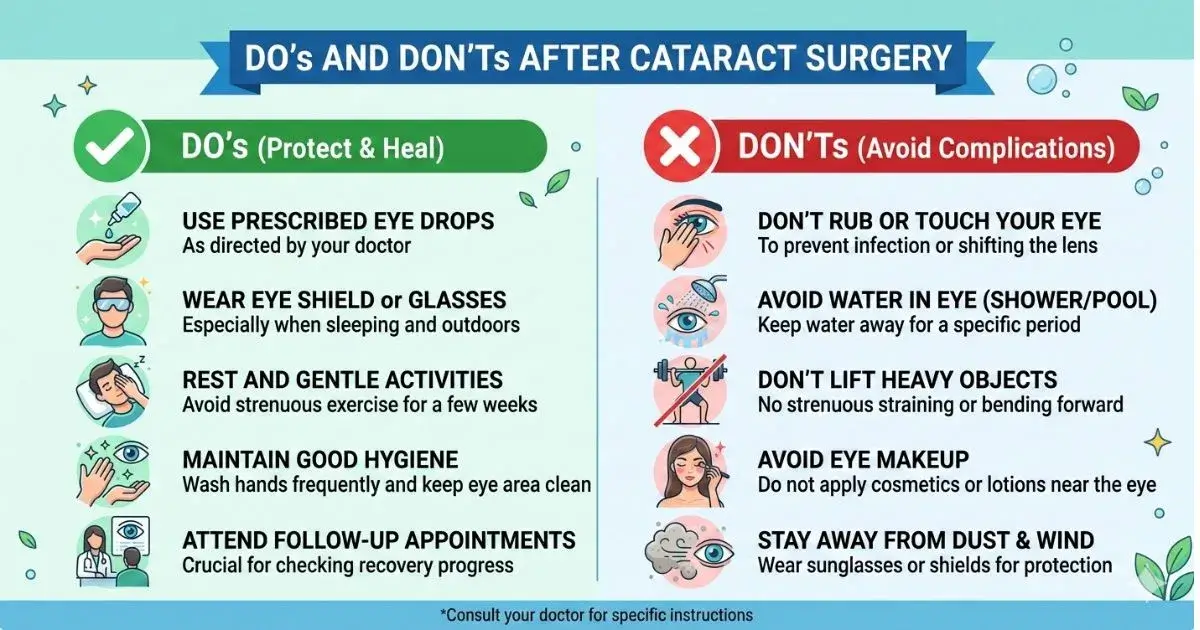
Do’s After Cataract Surgery
The eye can heal in a comfortable manner after taking the right steps after the surgery. These are basic precautions that are very essential in keeping the eyes healthy.
1. Use Prescribed Eye Drops
Eye drops prescribed by your ophthalmologist are a key part of recovery. These drops are used to prevent infection as well as to decrease swelling in the eye.
The patients are supposed to take the medications in the specific time that is prescribed by the physician. Wash the hands well before putting in the drops and do not touch the eye with the dropper tip. The course of medication should be taken to the latter, as it helps sustain a smooth healing process.
2. Keep Your Eyes Out of the Way
The eye is also more sensitive to the environment like sunlight, dust, and pollution after surgery. Putting on a pair of sunglasses in case of outdoor activities helps to cover up the eye and decrease the sensitivity to light.
During the initial few days, doctors usually prescribe the use of an eye shield at the time of sleeping. This ensures that the healing eye is not accidentally rubbed off or pressed.
3. Give Your Eyes Proper Rest
Although most of the things that you can do on a daily basis can be slowly resumed, it is good to have your eyes resting during the initial recovery stages. Excessive screen pressure or reading could temporarily make one uncomfortable.
One of the best methods is to have those eyes in the normal position but with frequent breaks in case they are tired. Resting in intervals is beneficial to the eye tissues to restore themselves.
4. Attend Follow-Up Appointments
Visit follow-ups enable the physician to follow up on the recovery progress and confirm the absence of any complications. These visits contribute to the provision of post-surgery care.
At such appointments, the doctors ensure if the artificial lens is in place by checking eye pressure and looking at the vision.
5. Maintain Eye Hygiene
Cleaning the area of the eyes will minimize the chances of infection. Wash your hands always before touching the part surrounding your eyes or applying any medication.
Basic hygiene like not using dirty towels and cleaning the eye shield helps to avoid infection of the eye.
Don'ts in the Post- Cataract surgery
Some of the activities lead to a recovery process whereas others may disrupt the process of healing. It is equally important to avoid the following habits as much as adherence to the recommended precautions.
1. Do Not Rub Your Eyes
One of the most frequent errors that a patient makes after cataract surgery is the rubbing of the eyes. Even mild rubbing causes irritation on the surgical site and slows down healing.
When the eye is itchy or irritated then you should make sure that you do not touch the eye but instead see your doctor.
2. Shun intensive physical exercises
The activities that cause pressure to the eye should not be done within the initial few weeks after surgery. This involves heavy lifting, bending over and over or intense exercising.
Your physician will give you guidelines on when it is okay to get back to normal body exercise.
3. Limit Dusty Environments
The eye may be irritated by dust, smoke, and pollution which may cause the risk of being infected. During the initial stages of recovery, patients are not supposed to be in the construction sites or highly polluted areas.
Wearing protective glasses when going out can be used to minimize exposure to irritants.
4. Avoid Swimming for Some Time
Various water bodies can also contain bacteria like swimming pools, lakes, and hot tubs and cause infection. The majority of physicians would advise against swimming in case the eye is not healed appropriately.
As soon as the doctor is convinced that the body has healed, normal functioning like swimming can resume gradually.
5. Avoid Using Eye Makeup
Make-up like mascara, eyeliner and eye shadow should be avoided within the first days after surgery. Such products can bring bacteria or cause damage to the sensitive part of the eye.
Patients are usually advised to wait a few weeks before resuming eye makeup.
Cataract Surgery Recovery Time
The patients are generally cured in a short period following cataract surgery. Their vision improves in many people in a matter of few days though the eye still takes time to heal over a number of weeks.
Light sensitivity, watery eyes, or mildly blurred vision may be caused during the initial number of days. These symptoms normally improve with the healing of the eye.
In general:
- It takes approximately 12 weeks to recover.
- Full recovery can be achieved in 4-6 weeks.
Given the Do's and Don’ts After Cataract Surgery, it is possible to enhance the process of quick recovery and guarantee the promising outcomes.
Red Flags That Require Medical Care
Despite the high level of safety of cataract surgery, patients must be aware of some of the symptoms that they may experience in the aftermath. Emergency care should be taken in case of the following:
- Severe eye pain
- Sudden decrease in vision
- Persistent redness or swelling
- Flashes of light or floating spots in vision
- Unusual eye discharge
The symptoms are uncommon but should never be ignored by a specialist of the eye.
Conclusion
Vision and quality of life may be really enhanced through cataract surgery, yet it is necessary to take care of the patient after the surgery to ensure a seamless recovery. Knowing the Do’s and Don’ts After Cataract Surgery, patients may save their eyes and assist in the recovery.
Simple measures such as using the prescribed drugs, keeping the eyes free of irritants, follow-ups and avoiding activities that may strain the eye are some of the easy measures that can make a great difference. Through adequate attention and counselling by an eye expert, most patients regain their sight within a short term and have a better vision for many years.
In case you are either about to have cataract surgery or just had it, then you can consider the following measures and have a comfortable and safe recovery.
Also Read: All About Cataract Surgery & IOL
Book Consultation
-
- Phone :
- Email :
- Address :
-
- +91 8400715572
- [email protected]
- Jaishankar Building, 2/176, opposite Shiv Murti, Sector 2, Vikas Nagar, Lucknow, Uttar Pradesh 226022